Guide · Health
Eyebrow dandruff: why it is probably seborrhoeic dermatitis, why oils make it worse, and what clears it
By Dr. Helena Marsh, consultant trichologistMedically reviewed by Dr. Helena MarshUpdated 24 Jun 2026 · 8 min read
What is actually happening
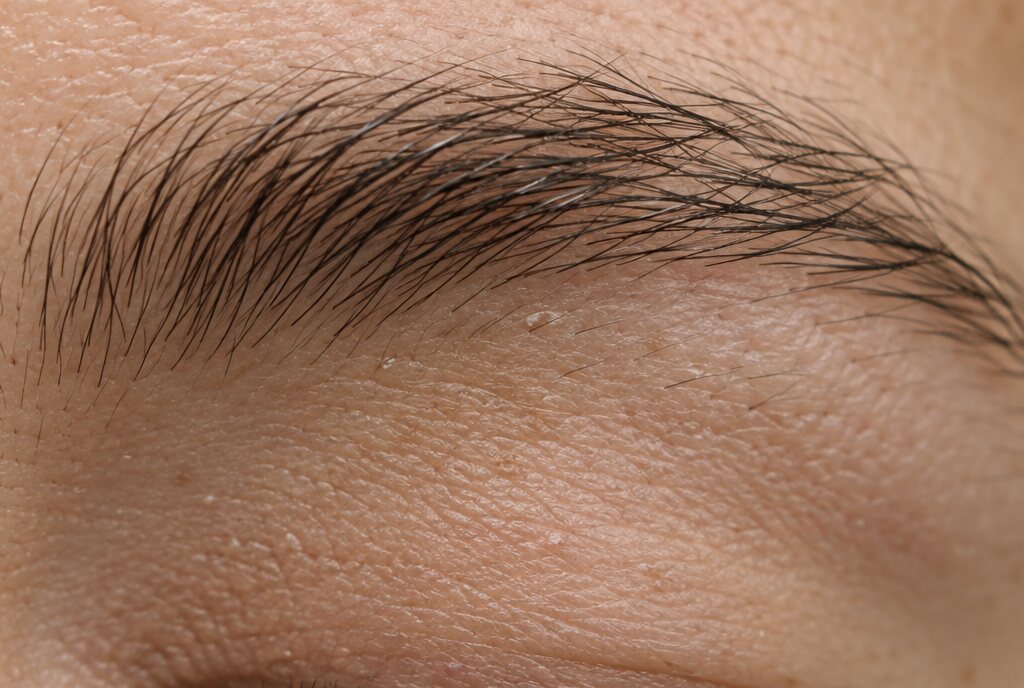
The brows sit on some of the oiliest skin on the face, and that oil feeds a yeast called Malassezia that lives on everyone. In some people the immune system reacts to the yeast's by-products with inflammation: redness, itch, and skin that turns over too fast and sheds as greasy, yellowish flakes. That is seborrhoeic dermatitis. It is the same condition as dandruff on the scalp, and it favours the brows, the sides of the nose, the beard and the ears for the same reason: oil.
It flares with stress, cold dry weather, illness and fatigue, and it tends to come and go for years. It is not contagious, not caused by poor hygiene, and not the same as dry skin, which is why moisturising it does nothing.
Why oils make it worse
The instinct when skin flakes is to add oil: castor oil for the brows, a facial oil, a rich balm. Malassezia feeds on the fatty acids in oils, so this is the equivalent of fertilising the problem. People who oil their brows nightly for growth and develop flaking a few weeks later have usually caused it. Stop every oil-based product on the brow area, including oil cleansers and brow serums with a heavy oil base, and the flaking often improves within days on its own.
What clears it
Antifungal shampoo. A shampoo containing ketoconazole, selenium sulphide or zinc pyrithione, available over the counter for scalp dandruff, works on the brows too. Lather a little into the brows, leave it two to three minutes, rinse thoroughly, keeping it out of the eyes. Twice a week for two weeks usually clears a flare; once a week afterwards keeps it away.
A short course of mild hydrocortisone. For an angry, itchy flare, 1% hydrocortisone cream for a few days settles the inflammation while the antifungal deals with the cause. Not for long-term use on the face, and not near the eye margin.
Gentle cleansing. A non-oil cleanser daily. No scrubbing; mechanical exfoliation inflames the skin and makes the flaking worse the following day.
Most people see clear skin within two weeks. If nothing has changed by then, the diagnosis may be wrong; see below.
When flaking means something else
Psoriasis. Thicker, drier, silvery scale on a well-defined red patch, often with similar patches at the hairline, elbows or knees. It does not respond to antifungals and needs a prescription.
Eczema or contact dermatitis. Intense itch, sometimes weeping, and a recent new product: a tint, a lamination kit, a serum. Stop the product. If the brows have been rubbed raw, the outer third may thin; see outer-third thinning.
Flaking with hair loss. Seborrhoeic dermatitis rarely causes lasting brow loss. Flaking plus shedding plus smooth bald patches may be alopecia areata or a scarring alopecia and should be seen by a dermatologist promptly.
Flaking that spreads to the cheeks, chest or scalp margins and will not settle may need a prescription-strength treatment or a check for underlying causes.
Brow products while it settles
Pause tinting, lamination and any oil-based serum until the skin is clear for two weeks; all three irritate inflamed skin and the tint will not take evenly on flaking skin. Pencil and a light gel are fine. When you restart a growth serum, choose a light, fast-drying, oil-free formula; the ones at the top of our serum ranking fit that description. If the flaking returns every time you use a particular product, that product is the trigger, however good its reviews.
Common questions
Can eyebrow dandruff cause hair loss?
Rarely and temporarily. Severe inflammation can shed a few hairs, and scratching breaks more, but the follicles are intact and the hair returns once the skin settles.
Is coconut oil good for eyebrow dandruff?
No. Like all oils it feeds the yeast that drives the condition. It can make flaking look better for a day by sticking the flakes down, then worse.
Will it go away on its own?
Flares often settle on their own in a few weeks, especially in summer. The condition itself tends to recur for years, which is why a weekly antifungal wash is worth keeping up.
Dr. Helena Marsh
Consultant trichologist and the Lab's medical reviewer. Writes the health-related guides and reviews every medical statement on the site before publication.