Home/Guides/Over-plucked brows
Guide · Regrowth
How to regrow over-plucked eyebrows: what works, what doesn't, and how long it takes
By Clara Osei, senior editorMedically reviewed by Dr. Helena MarshUpdated 20 Aug 2026 · 9 min read
Why plucked brows stop growing back
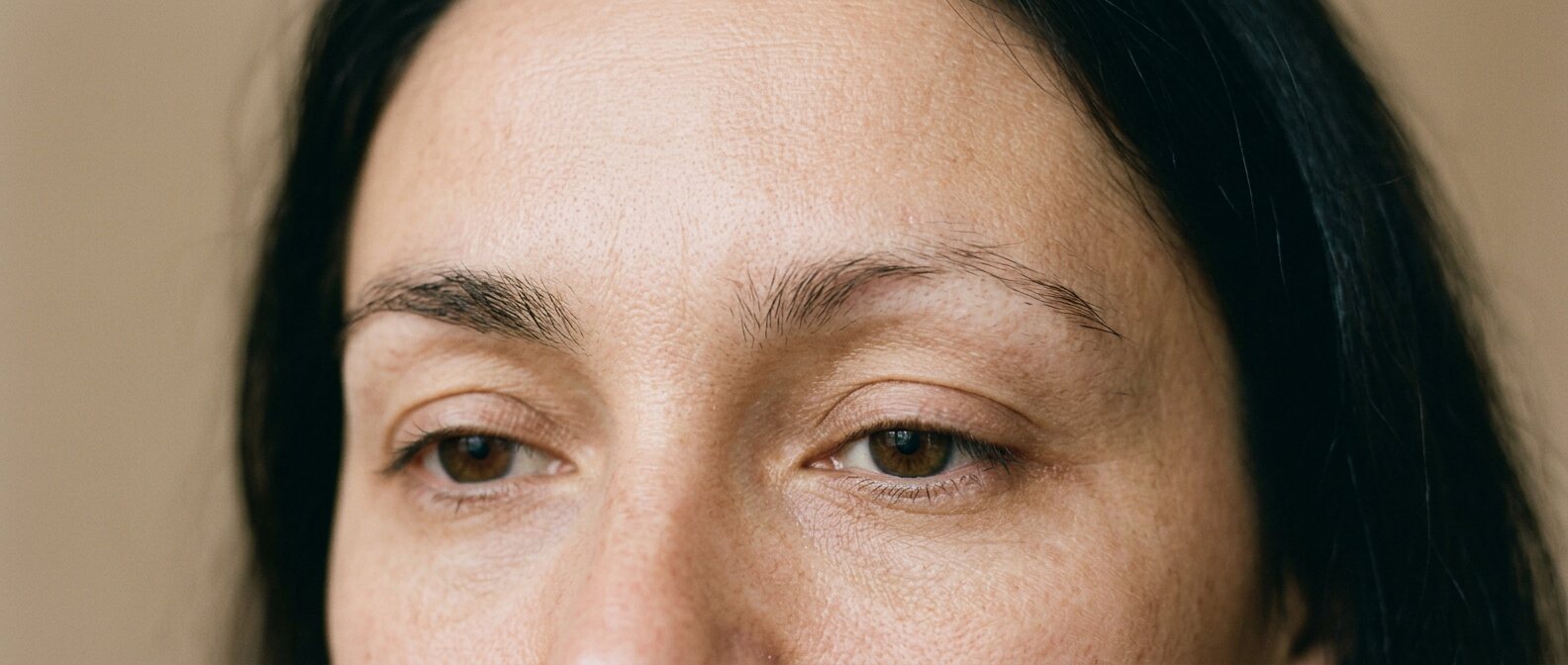
Each brow hair grows from a follicle on a cycle of roughly four months: a short growth phase, a rest phase, and shedding. Plucking removes the hair but not the follicle, so an occasional pluck is harmless. Repeated plucking of the same follicle over years can cause miniaturisation: the follicle keeps cycling but produces progressively finer, shorter hairs until they become invisible.
This is why the tail of the brow, the area most often over-plucked in the 1990s and 2000s, is where regrowth is slowest and least complete. The follicles are usually still present, which is good news for serums, but they need several full cycles to recover.
How long regrowth takes
Once plucking stops, visible regrowth typically begins between weeks 6 and 10, and brows continue filling in over the following cycles. People who have plucked the same area for 15 years or more generally regain less and plateau earlier, because some follicles have miniaturised past the point of recovery.
What to use: serums, oils, minoxidil
Peptide serums have small trials behind them and consistently positive user feedback for over-plucked brows. They are the first thing we recommend if you want to speed regrowth. See the current ranking.
Castor oil is the most searched brow remedy and the least supported. It conditions and darkens existing hair, which can make brows look fuller, but there is no good evidence it grows new hair.
Minoxidil 2–5% is used off-label for brows and has small clinical trials behind it. It is effective but must be continued indefinitely, and misapplication can cause hair growth on the eyelid or temple. Discuss with a dermatologist before use.
What to avoid during regrowth
Resist shaping for the full 12 weeks. New hairs come in at odd angles and look untidy at week 6; this is the moment most people pluck them and reset the clock. Avoid brow lamination and tinting during this period as well: both involve chemistry that stresses fine new hairs. If you want the laminated look later, see our lamination kit ranking.
Filling in while you wait
A clear brow gel brushed upward holds stray regrowth flat and makes the brow read as fuller. For the tail, a micro pencil with hair-like strokes is more convincing than powder, which sits on skin and emphasises gaps. Tinted gels are the quickest option but transfer onto new hairs unevenly.
When to see a dermatologist
If no regrowth appears after four months without plucking, or if loss affects the outer third of both brows symmetrically, the cause may be thyroid-related, nutritional, or alopecia areata. A dermatologist can distinguish these in one visit. Serums will not help until the underlying cause is addressed. Our outer-third thinning page covers the warning signs.
Common questions
Can over-plucked eyebrows grow back after 20 years?
Often partially. Follicles can be dormant for decades and still respond once plucking stops, but some will have miniaturised permanently. Expect slower, less complete regrowth than after a few years of plucking.
Does Vaseline help eyebrows grow?
No. It is an occlusive that protects skin and makes hair look glossier. It has no effect on the follicle.
Should I use a serum or just wait?
Waiting works for most people. A peptide serum is worth it if you want to speed things up or have been plucking for many years. See our serum ranking for the options.
Clara Osei
Senior editor. Eight years covering cosmetic science; runs the Lab's tester panel. Reviewed for medical accuracy by Dr. Helena Marsh, consultant trichologist.